MINIMAL COMMUNICATION CIRCUIT IN APHASIA: Psychometric Properties and Clinical Utility of the Pragmatic Neurolinguistic Assessment ICRA-R Battery
Abstract
It remains a challenge to systematically and quantitatively assess the pragmatic performance of severely aphasic patients and determine severity levels. To this end, the ICRA-R Battery was designed based on the concepts of the Minimal Communication Circuit and the pragmatic features of the ICRA Method (Abraham & Brenca, 2013, 2016). It consists of four instruments. The psychometric analysis of the validation and reliability of Instrument 1 (Record and Script) and the expert-level validity of the CCA and CCP Questionnaires, which assess caregivers' perceptions of the patient's current and premorbid communicative competence, are described. Severity levels were established, and the developmental profile was graphed.
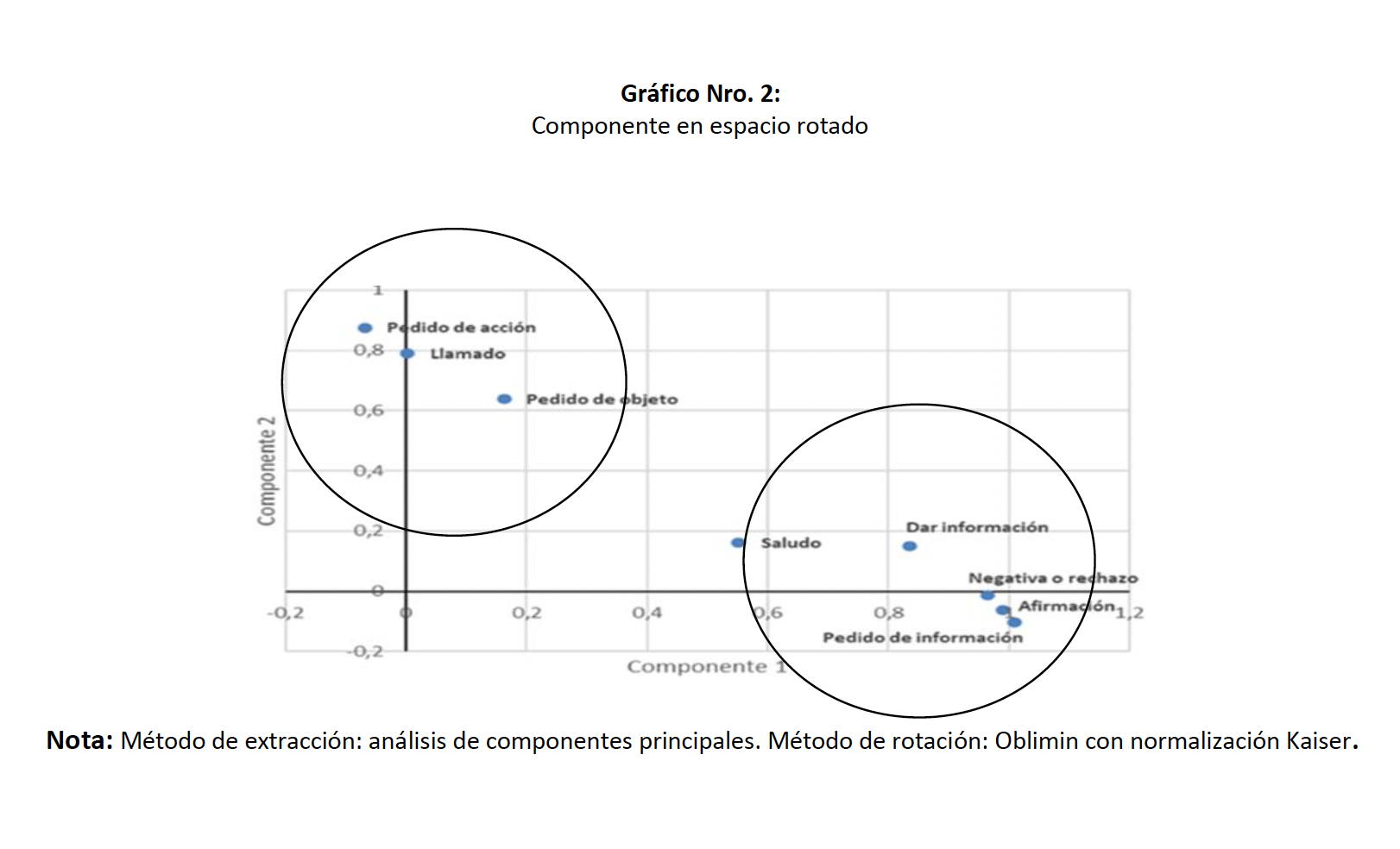
Validity was analyzed by experts (> 93.1%), factor analysis and principal components extraction, analysis of agreement between evaluators (Fleiss's Kappa > 85%; Cohen's Kappa > 95.0%, inter-observer analysis applying intraclass correlation = 0.900 (95% CI: 0.791-0.957) and repeated measures ANOVA from means and confidence intervals) and internal consistency (Cronbach's Alpha 0.966).
Keywords: Aphasia, Pragmatic Aspect, Psychometric Analysis, Basic Speech Act; Minimal Communication Circuit.
Additional Files
Published
How to Cite
Issue
Section
License
Copyright (c) 2026 María del Valle Abraham , Erica Bogliotti

This work is licensed under a Creative Commons Attribution-NonCommercial-ShareAlike 4.0 International License.
Articles published in this journal are protected under the Creative Commons Attribution-NonCommercial-ShareAlike 4.0 International (CC BY-NC-SA 4.0) license. This means that authors retain full rights over their research and publications at all times. As a journal, we fully respect and promote the principles of open access established by this license, allowing the work to be shared, adapted, and distributed for non-commercial purposes, provided that appropriate credit is given to the authors and any derivative works are licensed under the same terms.
Authors are responsible for obtaining the required permission when they wish to reproduce part of the material (figures, etc.) from other publications.
Likewise, CNPs allows authors to host in their personal sites or other repositories that they deem convenient the Final and Definitive Version of the published article with the format assigned by the journal. In no case do we allow access to preprints of the article under evaluation or already published.
When submitting an article to CNPs you are aware that all the contents of CNPs are under a Creative Commons License. In which it is allowed to copy and share the contents freely, always making reference to the origin of the publication and its author.