BETWEEN MYTH AND EVIDENCE: NEUROSCIENTIFIC LITERACY AMONG TEACHERS
Abstract
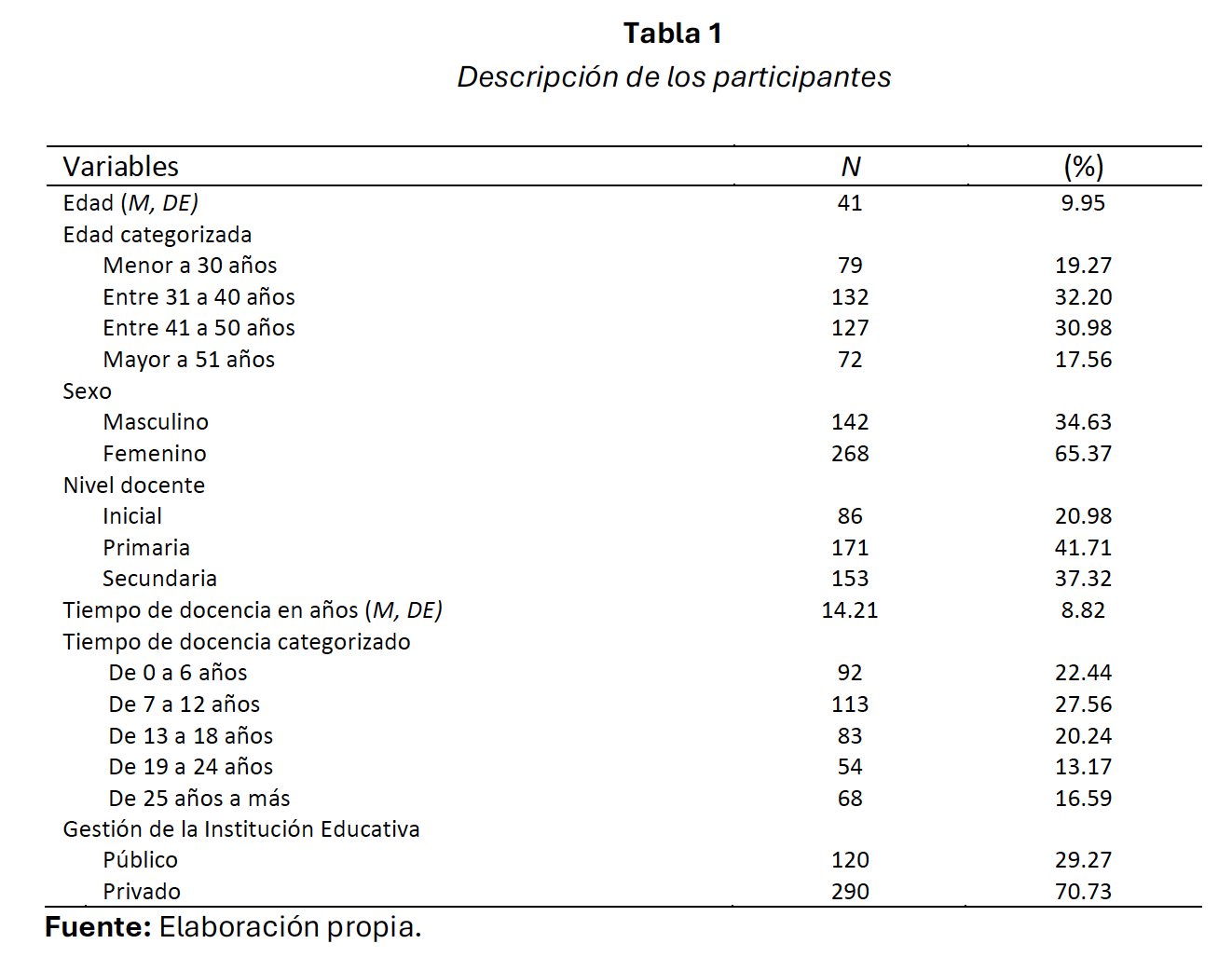
The increase in research on neuroeducation provides valuable information for understanding how the brain works in educational practice. This growth has also led to the emergence of errors in the interpretation of scientific findings, known as neuromyths. This is an empirical study, using a cross-sectional associative strategy, in which 410 Peruvian teachers from regular basic education, at the early childhood, primary, and secondary levels, participated by responding to a questionnaire on neuromyths and general knowledge about how the brain works. Two predictive models were evaluated, finding that the score for general knowledge about brain function, the type of institutional management, and the teacher's educational level were variables that contributed significantly to the detection of neuromyths. In turn, attendance at neuroeducation training, teaching experience, and the type of institutional management were significantly related to the level of general knowledge about brain function. These results are consistent with previous studies and highlight the need to strengthen teacher training in reliable neuroscientific foundations.
Downloads
Published
How to Cite
Issue
Section
License
Copyright (c) 2025 Luis Echavarría-Ramírez , Luis Taype-Huarca , Luis Ramos-Vargas

This work is licensed under a Creative Commons Attribution-NonCommercial-ShareAlike 4.0 International License.
Articles published in this journal are protected under the Creative Commons Attribution-NonCommercial-ShareAlike 4.0 International (CC BY-NC-SA 4.0) license. This means that authors retain full rights over their research and publications at all times. As a journal, we fully respect and promote the principles of open access established by this license, allowing the work to be shared, adapted, and distributed for non-commercial purposes, provided that appropriate credit is given to the authors and any derivative works are licensed under the same terms.
Authors are responsible for obtaining the required permission when they wish to reproduce part of the material (figures, etc.) from other publications.
Likewise, CNPs allows authors to host in their personal sites or other repositories that they deem convenient the Final and Definitive Version of the published article with the format assigned by the journal. In no case do we allow access to preprints of the article under evaluation or already published.
When submitting an article to CNPs you are aware that all the contents of CNPs are under a Creative Commons License. In which it is allowed to copy and share the contents freely, always making reference to the origin of the publication and its author.